Bird · Carnivore · Wetlands and coasts
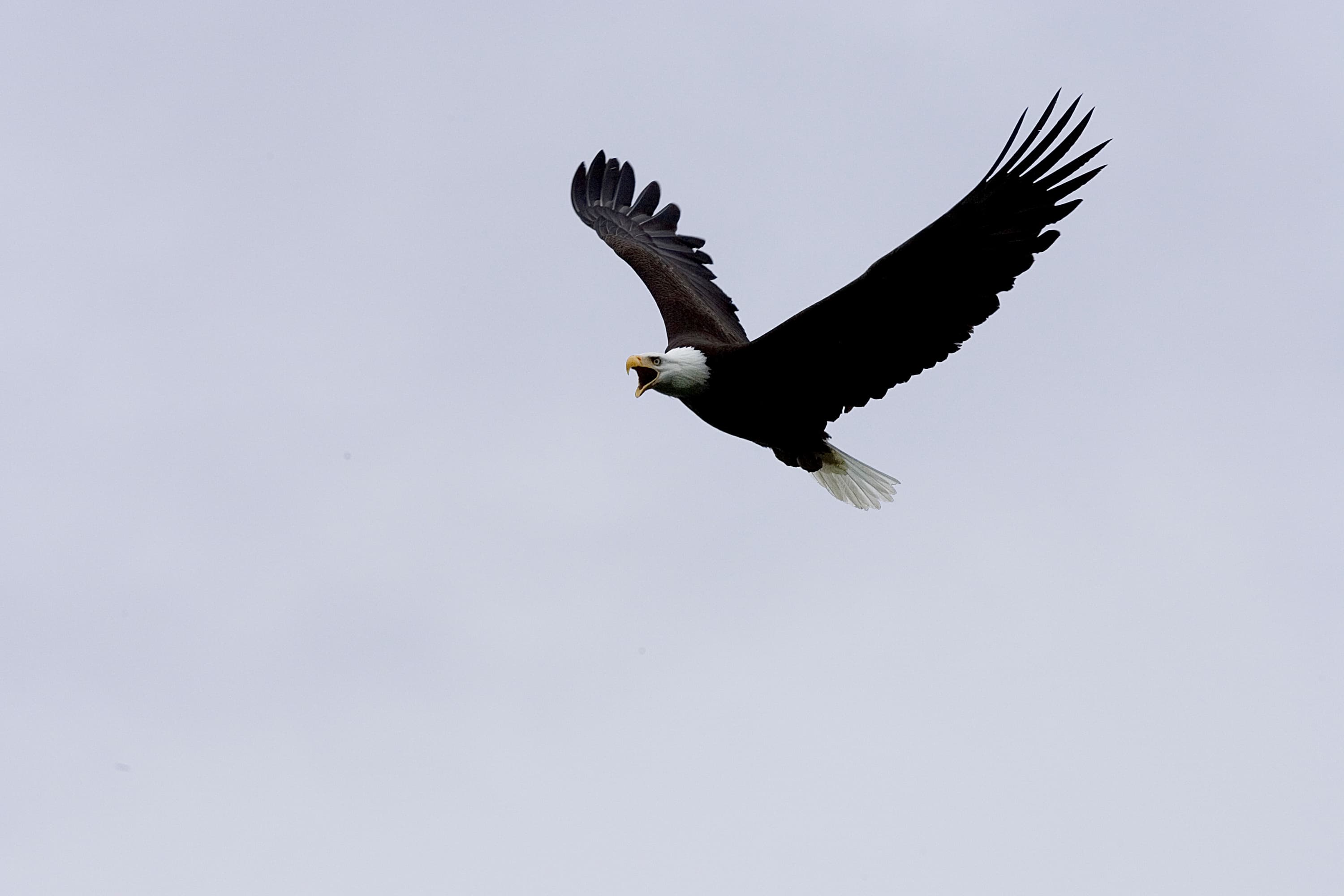
Bald eagle
Haliaeetus leucocephalus
The bald eagle is a fish-eating sea eagle of North America. Recovery after DDT restrictions is a well-documented conservation case, though local threats remain.
Interactive model
Characteristics
- 3–6.3 kg (adult)
- ≈ 6.6–13.9 lb (adult)
- 1.8–2.3 m (adult)
- ≈ 5.9–7.5 ft (adult)
- 15–28 years
- ≈ 15–28 years
Activity: Mostly diurnal
Taxonomy
Life stages
Nestling
Raised in bulky stick nests, often reused for years.
Immature
Mottled plumage for several years before the white head appears.
Adult
Territorial pairs defend nest areas near water.
Adaptations
Fish-catching talons
Rough foot pads and sharp talons help seize slippery fish near the surface.
Behaviour
Takes fish, waterbirds and carrion; piracy from other birds is common.
Habitat and range
- North America (native)
Conservation
Least Concern
Population trend: Increasing
Assessment year 2016 (curated, not live).
- Lead poisoning
- Collisions
Source: Haliaeetus leucocephalus. The IUCN Red List of Threatened Species
Compare
Sources
- Haliaeetus leucocephalus. The IUCN Red List of Threatened Species — conservation
- Haliaeetus leucocephalus on Animal Diversity Web or equivalent secondary literature — measurement
- Haliaeetus leucocephalus on Animal Diversity Web or equivalent secondary literature — text
Photograph: Steve Hillebrand, USFWS, PUBLIC DOMAIN