Mammal · Filter feeder · Marine
Blue whale
Balaenoptera musculus
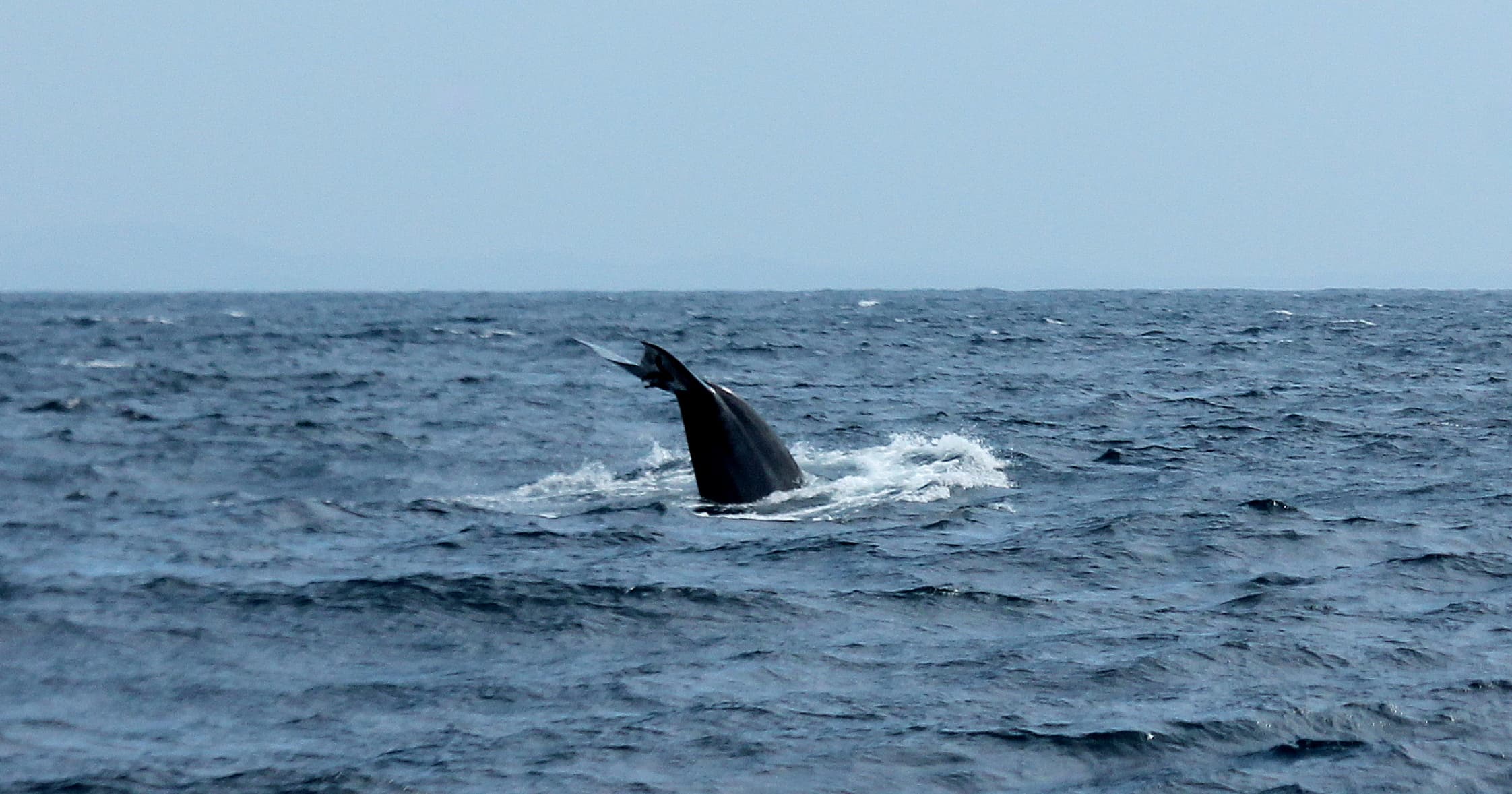
The blue whale is the largest known animal. It lunge-feeds on krill in productive oceans. Populations remain far below pre-whaling estimates in most ocean basins.
Interactive model
Characteristics
- 80,000–150,000 kg (adult)
- ≈ 176,369.8–330,693.4 lb (adult)
- 24–30 m (adult)
- ≈ 78.7–98.4 ft (adult)
- up to 48 km/h (maximum recorded)
- ≈ up to 29.8 mph (maximum recorded)
- 70–90 years
- ≈ 70–90 years
Scale
Bars are proportional to a linear dimension (height or length). They are not mass. Human reference is 1.7 m.
- Blue whale27 m
- Average adult human1.7 m
- Double-decker bus4.4 m
- Two-storey house8 m
Activity: Cathemeral
Taxonomy
Life stages
Calf
Nursed on fat-rich milk; grows extremely quickly in the first months.
Adult
Migrates between feeding and breeding areas in several populations.
Adaptations
Expandable throat pleats
Ventral grooves let the mouth engulf enormous volumes of water and krill, then filter the catch through baleen.
Behaviour
Lunge feeding on dense krill patches.
Produces very low-frequency sounds that can travel long distances in water.
Habitat and range
- Global ocean (native)
Conservation
Endangered
Population trend: Increasing
Assessment year 2018 (curated, not live).
- Ship strikes
- Entanglement
- Historical whaling depletion
Source: Balaenoptera musculus. The IUCN Red List of Threatened Species
Compare
Sources
- Balaenoptera musculus. The IUCN Red List of Threatened Species — conservation
- Balaenoptera musculus on Animal Diversity Web or equivalent secondary literature — measurement
- Balaenoptera musculus on Animal Diversity Web or equivalent secondary literature — text
Photograph: Arvindkumarn, Wikimedia Commons, CC BY-SA