Mammal · Herbivore · Savanna
Giraffe
Giraffa camelopardalis
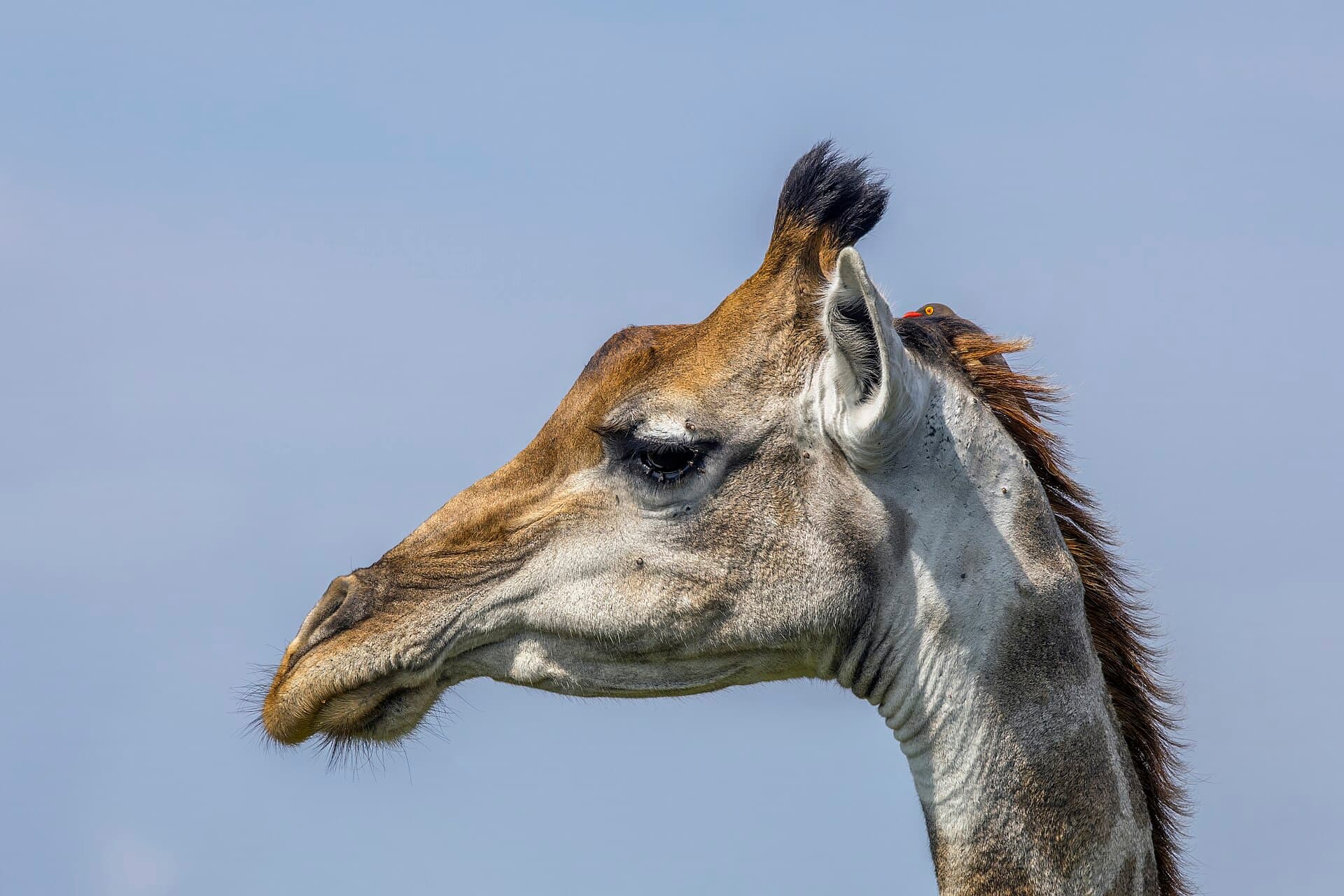
The giraffe is the tallest living terrestrial animal. A long neck and specialised circulation let it browse acacia canopies that shorter herbivores cannot reach. Taxonomy of giraffe lineages is actively revised; this profile follows a conservative single-species treatment used in many checklists.
Interactive model
Characteristics
- 4.3–5.7 m (adult)
- ≈ 14.1–18.7 ft (adult)
- 800–1,200 kg (adult)
- ≈ 1,763.7–2,645.5 lb (adult)
- up to 55 km/h (maximum recorded)
- ≈ up to 34.2 mph (maximum recorded)
- 20–28 years
- ≈ 20–28 years
Scale
Bars are proportional to a linear dimension (height or length). They are not mass. Human reference is 1.7 m.
- Giraffe5 m
- Average adult human1.7 m
- Double-decker bus4.4 m
- Two-storey house8 m
Activity: Mostly diurnal
Taxonomy
Life stages
Calf
Precocial; stands soon after birth and joins crèches in some populations.
Adult
Browsing adults; males compete with necking displays.
Adaptations
Long neck and high blood pressure
A powerful heart and specialised valves help maintain brain blood flow despite the vertical distance from heart to head.
Behaviour
Selective browser on leaves, flowers and fruits of tall trees.
Habitat and range
- Africa (native)
Conservation
Vulnerable
Population trend: Decreasing
Assessment year 2016 (curated, not live).
- Habitat loss
- Poaching
Source: Giraffa camelopardalis. The IUCN Red List of Threatened Species
Compare
Sources
- Giraffa camelopardalis. The IUCN Red List of Threatened Species — conservation
- Giraffa camelopardalis on Animal Diversity Web or equivalent secondary literature — measurement
- Giraffa camelopardalis on Animal Diversity Web or equivalent secondary literature — text
Photograph: Charles J. Sharp, Wikimedia Commons, CC BY-SA