Mammal · Omnivore · Temperate forest
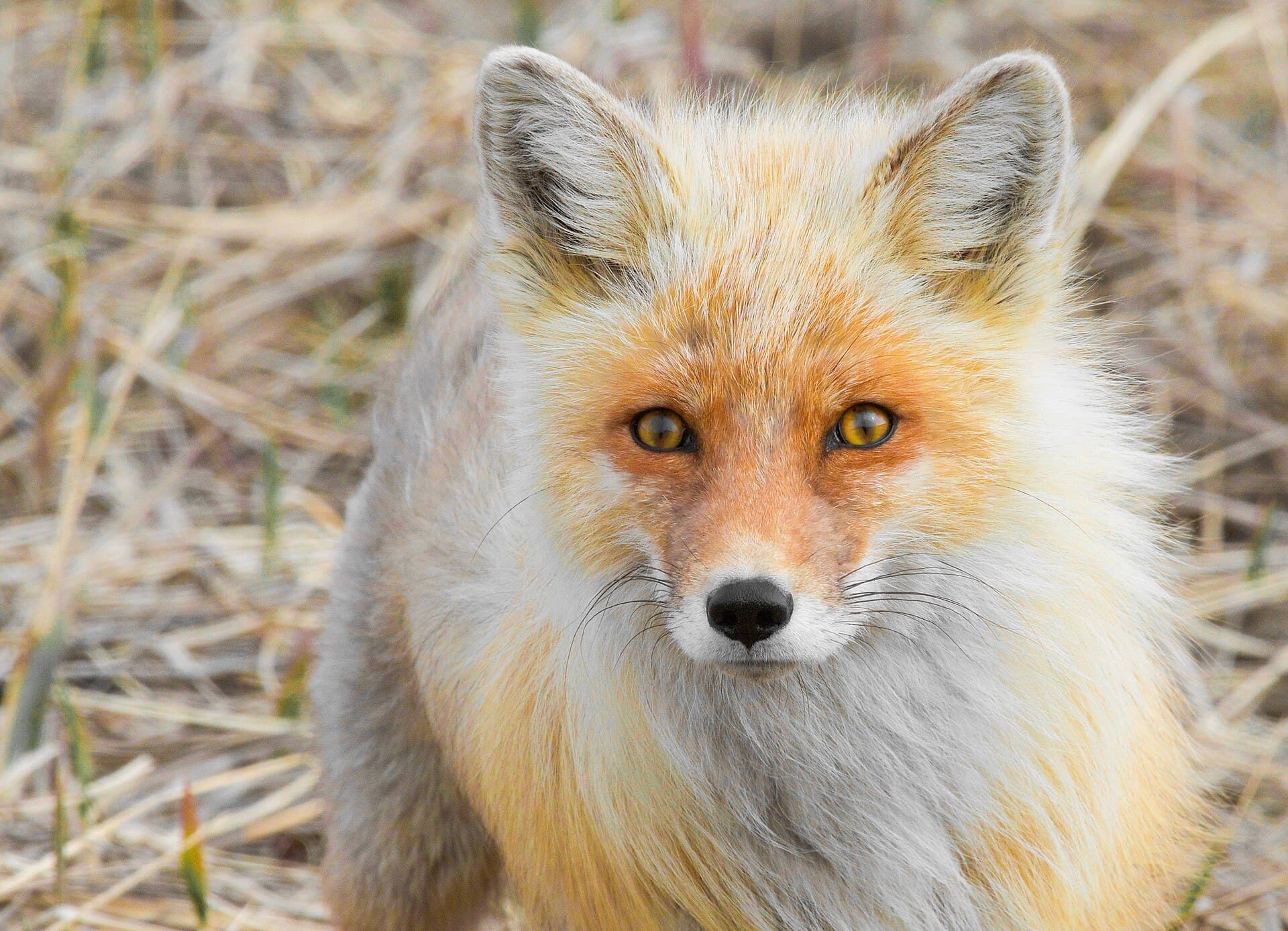
Red fox
Vulpes vulpes
The red fox is a highly adaptable canid occupying wild, rural and urban landscapes across the Northern Hemisphere. Diet is opportunistic rather than strictly carnivorous.
Interactive model
Characteristics
- 3–11 kg (adult)
- ≈ 6.6–24.3 lb (adult)
- 0.5–0.9 m (adult)
- ≈ 1.5–3 ft (adult)
- up to 50 km/h (maximum recorded)
- ≈ up to 31.1 mph (maximum recorded)
- 2–6 years
- ≈ 2–6 years
Scale
Bars are proportional to a linear dimension (height or length). They are not mass. Human reference is 1.7 m.
- Red fox0.7 m
- Basketball0.2 m
- Domestic cat0.3 m
- Average adult human1.7 m
Activity: Mostly nocturnal
Taxonomy
Life stages
Kit
Born in dens; both parents may provision.
Adult
Territorial pairs or small family groups depending on resources.
Adaptations
Hearing for hidden prey
Sensitive hearing helps locate small mammals under snow or vegetation before a pouncing strike.
Behaviour
Eats rodents, birds, invertebrates, fruit and scavenged food.
Habitat and range
- Europe (native)
- Asia (native)
- North America (native)
- Australia (introduced)
Conservation
Least Concern
Population trend: Stable
Assessment year 2016 (curated, not live).
- Local persecution
- Vehicle collisions
Source: Vulpes vulpes. The IUCN Red List of Threatened Species
Compare
Sources
- Vulpes vulpes. The IUCN Red List of Threatened Species — conservation
- Vulpes vulpes on Animal Diversity Web or equivalent secondary literature — measurement
- Vulpes vulpes on Animal Diversity Web or equivalent secondary literature — text
Photograph: Gregory "Slobirdr" Smith, Wikimedia Commons, CC BY-SA