Mammal · Herbivore · Tropical rainforest
Western gorilla
Gorilla gorilla
The western gorilla is a forest ape living in family groups led by a silverback. Fruit availability strongly shapes ranging; Ebola, hunting and forest loss have driven steep declines.
Interactive model
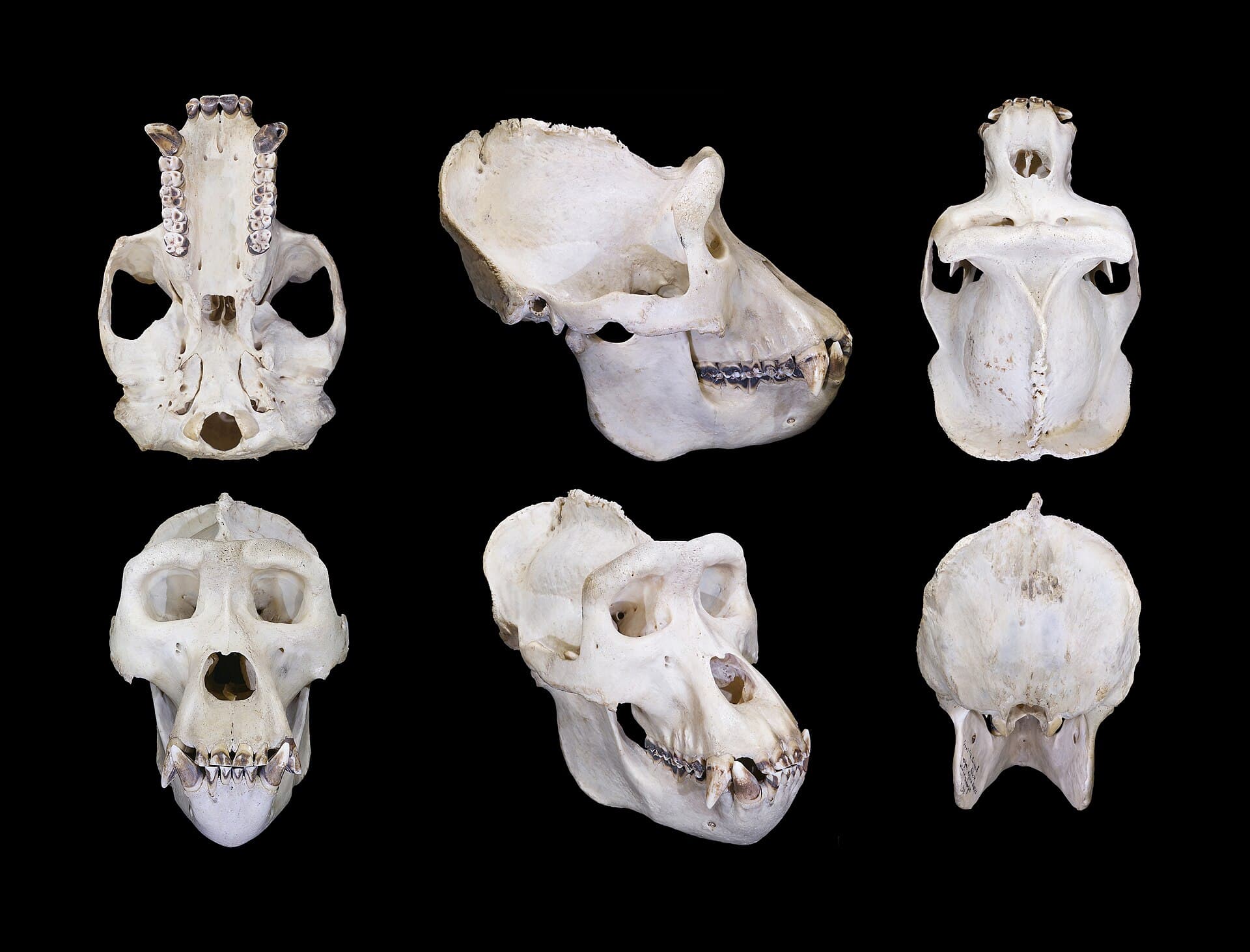
Characteristics
- 70–180 kg (adult)
- ≈ 154.3–396.8 lb (adult)
- 1.4–1.8 m (adult)
- ≈ 4.6–5.9 ft (adult)
- 30–40 years
- ≈ 30–40 years
Scale
Bars are proportional to a linear dimension (height or length). They are not mass. Human reference is 1.7 m.
- Western gorilla1.6 m
- Average adult human1.7 m
- Family car1.5 m
- Double-decker bus4.4 m
Activity: Mostly diurnal
Taxonomy
Life stages
Infant
Carried and nursed; weaning is gradual.
Juvenile
Plays within the group and samples adult foods.
Adult
Males may become silverbacks and hold groups; females transfer between groups.
Adaptations
Large gut for fibrous plants
A capacious digestive tract processes leaves and pith when fruit is scarce, supporting a mostly herbivorous diet.
Behaviour
Cohesive groups with one dominant male and several females plus offspring.
Day ranges track fruit; fallback foods include leaves, pith and invertebrates occasionally.
Habitat and range
- Africa (native)
Conservation
Critically Endangered
Population trend: Decreasing
Assessment year 2016 (curated, not live).
- Hunting
- Disease
- Forest loss
Source: Gorilla gorilla. The IUCN Red List of Threatened Species
Compare
Sources
- Gorilla gorilla. The IUCN Red List of Threatened Species — conservation
- Gorilla gorilla on Animal Diversity Web or equivalent secondary literature — measurement
- Gorilla gorilla on Animal Diversity Web or equivalent secondary literature — text
Photograph: Didier Descouens, Wikimedia Commons, CC BY-SA