Mammal · Carnivore · Savanna
Lion
Panthera leo
The lion is a social big cat of African savannas and a remnant population in India. Cooperative hunting and pride structure vary with prey and habitat; males are not universally the sole hunters.
Interactive model
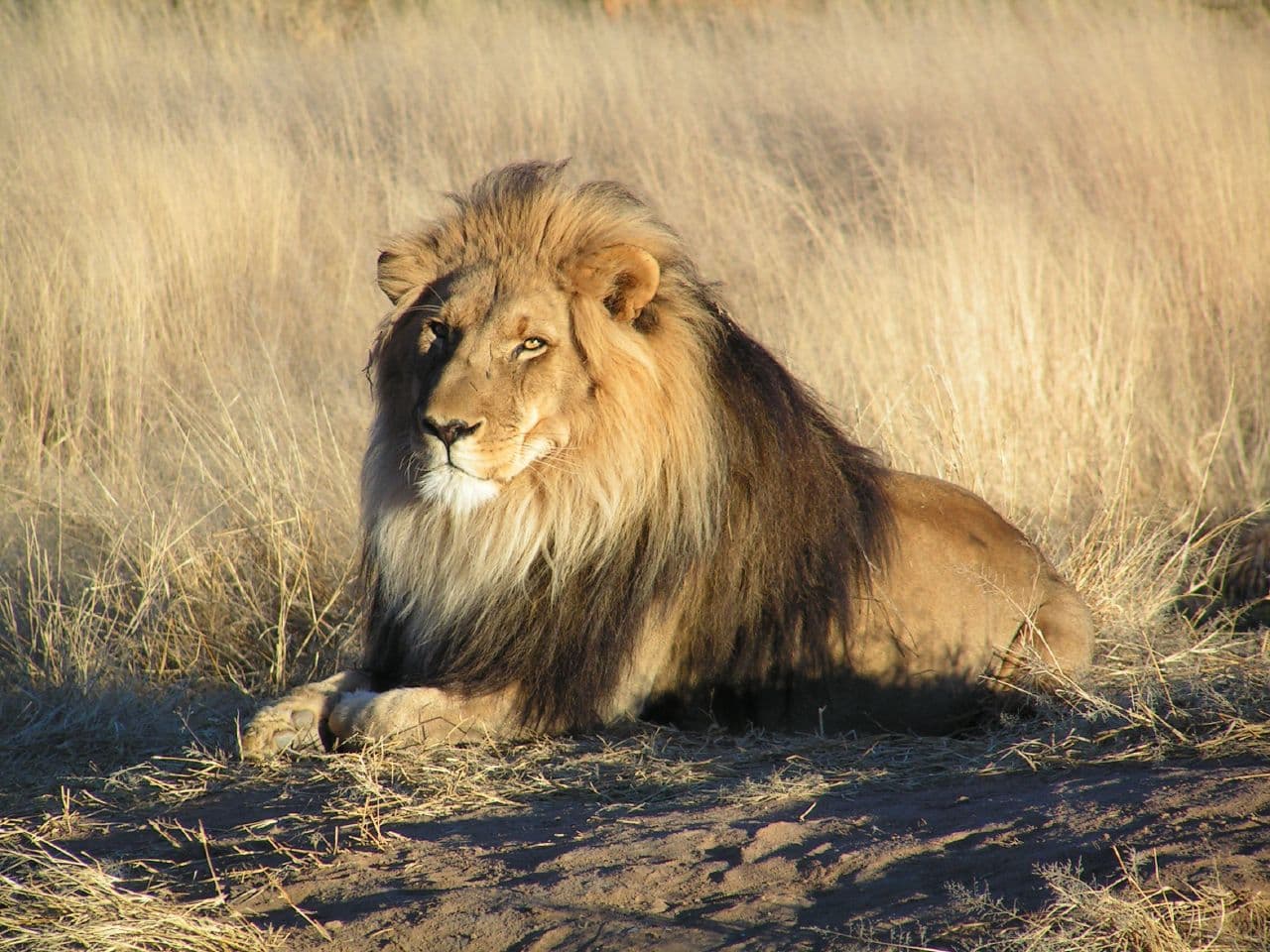
Characteristics
- 120–250 kg (adult)
- ≈ 264.6–551.2 lb (adult)
- 1.4–2.5 m (adult)
- ≈ 4.6–8.2 ft (adult)
- up to 80 km/h (maximum recorded)
- ≈ up to 49.7 mph (maximum recorded)
- 10–16 years
- ≈ 10–16 years
Scale
Bars are proportional to a linear dimension (height or length). They are not mass. Human reference is 1.7 m.
- Lion2 m
- Average adult human1.7 m
- Family car1.5 m
- Double-decker bus4.4 m
Activity: Crepuscular
Taxonomy
Life stages
Cub
Dependent on the pride; high early mortality from infanticide and starvation.
Subadult
Young males often disperse; young females may remain.
Adult
Breeding adults live in prides or nomadic coalitions depending on sex and density.
Adaptations
Cooperative hunting
Group hunts can improve success on large prey, though lions also hunt alone. Social hunting is an ecological tactic, not a video-game combo.
Behaviour
Prides are typically related females plus associated males.
Takes medium to large ungulates; scavenging is common.
Habitat and range
- Africa (native)
- Asia (native)
Conservation
Vulnerable
Population trend: Decreasing
Assessment year 2015 (curated, not live).
- Prey depletion
- Human–lion conflict
- Habitat fragmentation
Source: Panthera leo. The IUCN Red List of Threatened Species
Compare
Related species
Sources
- Panthera leo. The IUCN Red List of Threatened Species — conservation
- Panthera leo on Animal Diversity Web or equivalent secondary literature — measurement
- Panthera leo on Animal Diversity Web or equivalent secondary literature — text
Photograph: Kevin Pluck, Wikimedia Commons, CC BY